
Fillers and Injectables
Nobody Warns You Your Face Changes When You Lose Weight
Jul
First up, Kudos to your efforts. Weight loss is not an easy journey; it took a lot to get here. You did the hard part.
Maybe it took months, maybe it took years. Maybe it was a GLP-1 medication that finally made the scale move after everything else stopped working. Whatever the path, you got there, and you expected the mirror to hand you a win.
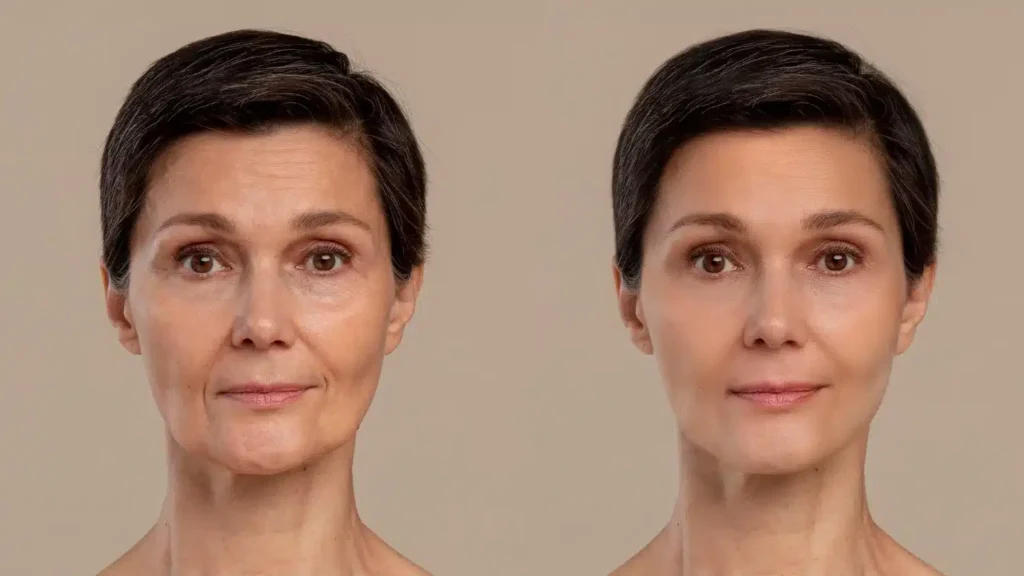
Instead, a lot of people describe something nobody warned them about: their face looks older. Not slimmer in the way they pictured. Hollow. Tired. Like the weight loss took something from their face that it didn’t take from the rest of their body.
If that’s you, you’re not imagining it, and you’re not alone. This is one of the most common and least talked about side effects of significant weight loss, especially the fast, sustained kind that GLP-1 medications can produce.
Why your face changes when the rest of you shrinks
Fat isn’t just padding. In the face specifically, it plays a structural role filling out the cheeks, supporting the under-eye area, softening the transition between features. It’s part of what gives a face its shape, not just its size.
When you lose weight quickly, facial fat tends to go first and go fast, often outpacing fat loss anywhere else on the body. The result is a face that can look years older almost overnight, not because you’ve aged, but because the underlying support structure has thinned out. Cheeks lose their fullness. Temples hollow. The under-eye area can look sunken even when you’re sleeping fine and feeling great.
It’s a strange, disorienting experience: feeling healthier and lighter than you have in years, while looking in the mirror and seeing someone who looks worn out. Nobody puts that part on the before-and-after posts.
This is common, and it’s treatable
Here’s the part that matters most: this isn’t something you have to just live with, and it isn’t a flaw in how you lost the weight. It’s a predictable, well-understood side effect and there are real solutions built specifically for it.
Losing weight with a GLP-1 can be life-changing, but rapid weight loss can sometimes lead to volume loss in the face, resulting in a more hollow or tired appearance.
That’s where biostimulators like Sculptra® and Radiesse® come in.
Unlike traditional fillers, these treatments work by stimulating your body’s natural collagen production to help restore structure, improve skin quality, and create gradual, natural-looking rejuvenation. They’re a great option for patients experiencing facial volume loss while on their weight loss journey.
Why biostimulators are different from traditional filler
Traditional HA fillers add volume directly think of them as filling in a specific area right away. Biostimulators work differently. Instead of just adding volume, they encourage your own body to rebuild collagen over time, which means the results build gradually and tend to look and feel more like your own natural structure returning, rather than something added on top of it.
For someone whose face has changed slowly over months of weight loss, that gradual, structural approach often feels like the right fit it’s not an overnight transformation, it’s a rebuilding process that matches the pace at which the change happened in the first place.
What this is actually about
The goal isn’t to make you look different it’s to help you look refreshed, supported, and like the best version of yourself while maintaining your results.
You worked hard to get healthier. You shouldn’t have to choose between feeling good in your body and feeling good about your face. This is about closing that gap helping the way you look catch up to the way you feel.
If this sounds familiar
If you’re currently on a GLP-1 and noticing changes in your face, let’s talk about whether Sculptra or Radiesse may be right for you. A consultation is a low-pressure way to understand what’s happening structurally and what your options look like no pressure, just information about what’s available to you.
You did the hard part already. This next part is just about making sure your face gets to catch up.
